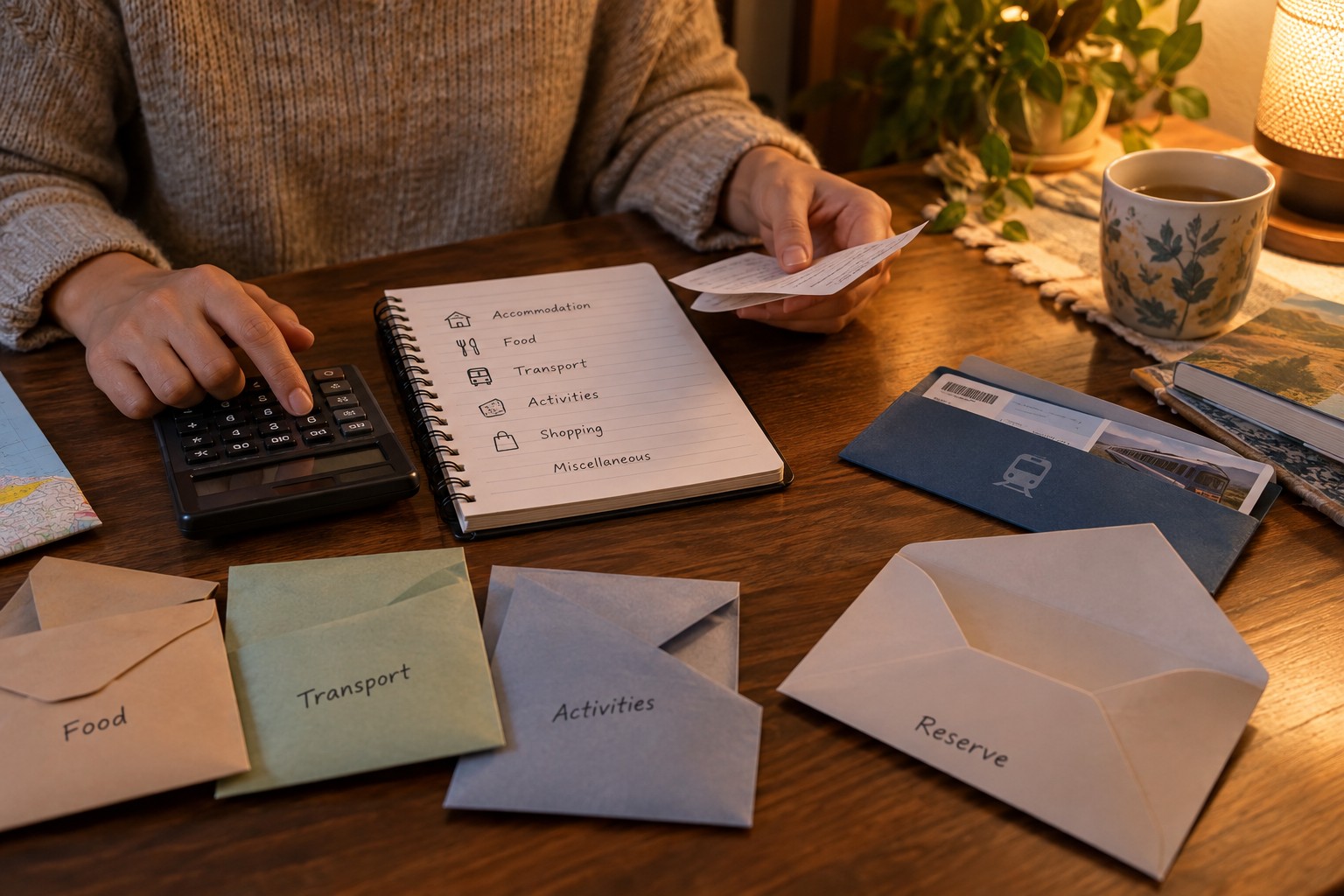
Begin with confirmed amounts
Record transport, accommodation and booked activities first. Use the total for the actual number of travellers and nights. Otherwise, a per-person price can easily be confused with a room price. Also identify which amounts have already been paid and which will become due during the trip.
Check included services against the booking conditions. Breakfast, luggage, reservations or local charges may appear separately depending on the product. Do not assume that a headline rate covers everything needed for your stay. Keep unresolved amounts marked as estimates until you have confirmed them, rather than mixing them with known costs.
Derive daily spending from the itinerary
Plan meals, local transport and admissions around the actual days. A travel day creates different expenses from a day containing several paid visits. A few understandable entries are more useful than one unexplained daily allowance. They show where a change would save money and where it would simply shift spending elsewhere.
For a sample calculation, add fixed and variable costs separately. An extra night increases more than accommodation: meals and possible activities extend too. Conversely, transport already purchased does not become cheaper just because you stay one day less. This distinction helps compare trip lengths without treating every expense as if it rose or fell at the same rate.
When several currencies are involved, mark the conversion used as an estimate. Actual card settlement and possible charges may differ. Use current information from your payment providers when making booking decisions. The budget is an overview, not a prediction of a guaranteed future exchange rate or a promise about transaction costs.
Give the contingency a purpose
Consider which changes in your particular itinerary might create extra spending. Examples include another necessary journey, a different dinner after arriving late or replacing something forgotten. The reserve should fit those possibilities and your own resources. A fixed percentage prescribed for every trip would say little about the situation you are preparing for.
Keep the contingency separate from discretionary shopping money. If both disappear into one remaining balance, it becomes difficult to see whether room for a change still exists. Decide which optional expenses you would remove if necessary. An additional unbooked museum visit is usually easier to drop than an essential journey home.
Record useful differences during and after travel
You do not need to record every small purchase several times. Keep actual amounts in one place and compare significant differences with the plan. On a group trip, make it clear who paid shared costs. Personal purchases do not automatically belong in the same division simply because they happened during the holiday.
Afterwards, review which estimates were useful. Local transport may have cost less than expected while repeated small purchases were missing. Those observations can improve the next budget. Retain the context of destination, season and travel style, however, rather than applying the total from one journey unchanged to every future trip.