Start with the baggage you actually booked
Before shopping, write down which baggage category your particular fare includes. A small item that fits beneath the seat and a larger case for the overhead compartment are different allowances. A product described as cabin luggage is not automatically accepted by every airline. Check the operating airline's information for your booking, including weight and the number of permitted pieces.
Compare those limits with the complete outside measurements, including wheels, handles and projecting pockets. An expansion zip only helps if you are allowed to use the additional space on this journey. Measure an existing case when packed: a soft front pocket can bulge much further than an empty product photograph suggests. Leave enough room for ordinary packing rather than relying on forcing a full bag into shape.
Compare the interior with your own packing list
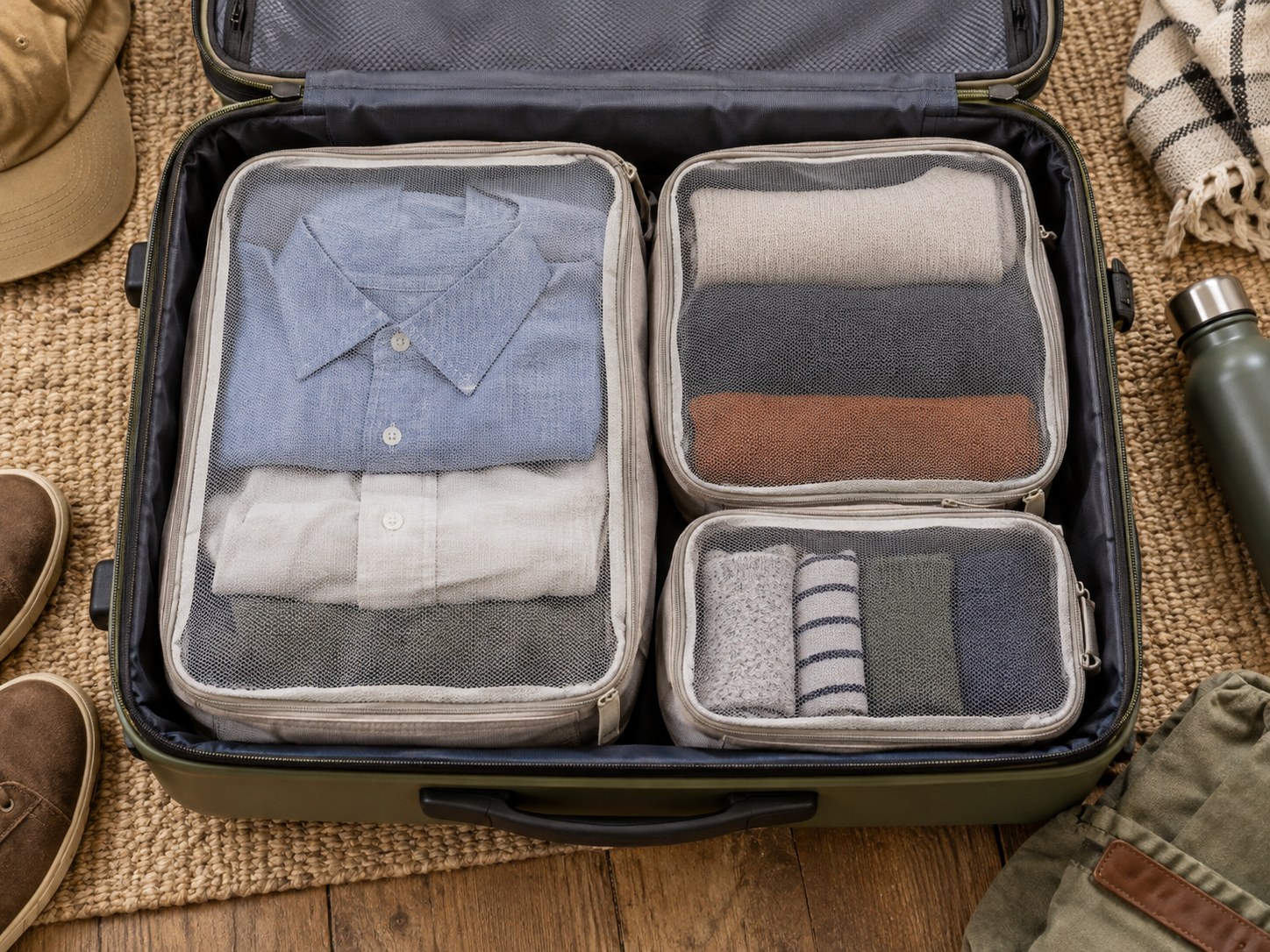
Lay out the clothes and objects you take on a typical trip. Separate rigid items, such as shoes and your wash bag, from compressible clothing. Then inspect the suitcase floor. Telescopic handle channels may project into the interior and affect how flat shoes or packing cubes can sit. A generous capacity figure tells you little about whether your particular rigid items fit next to each other.
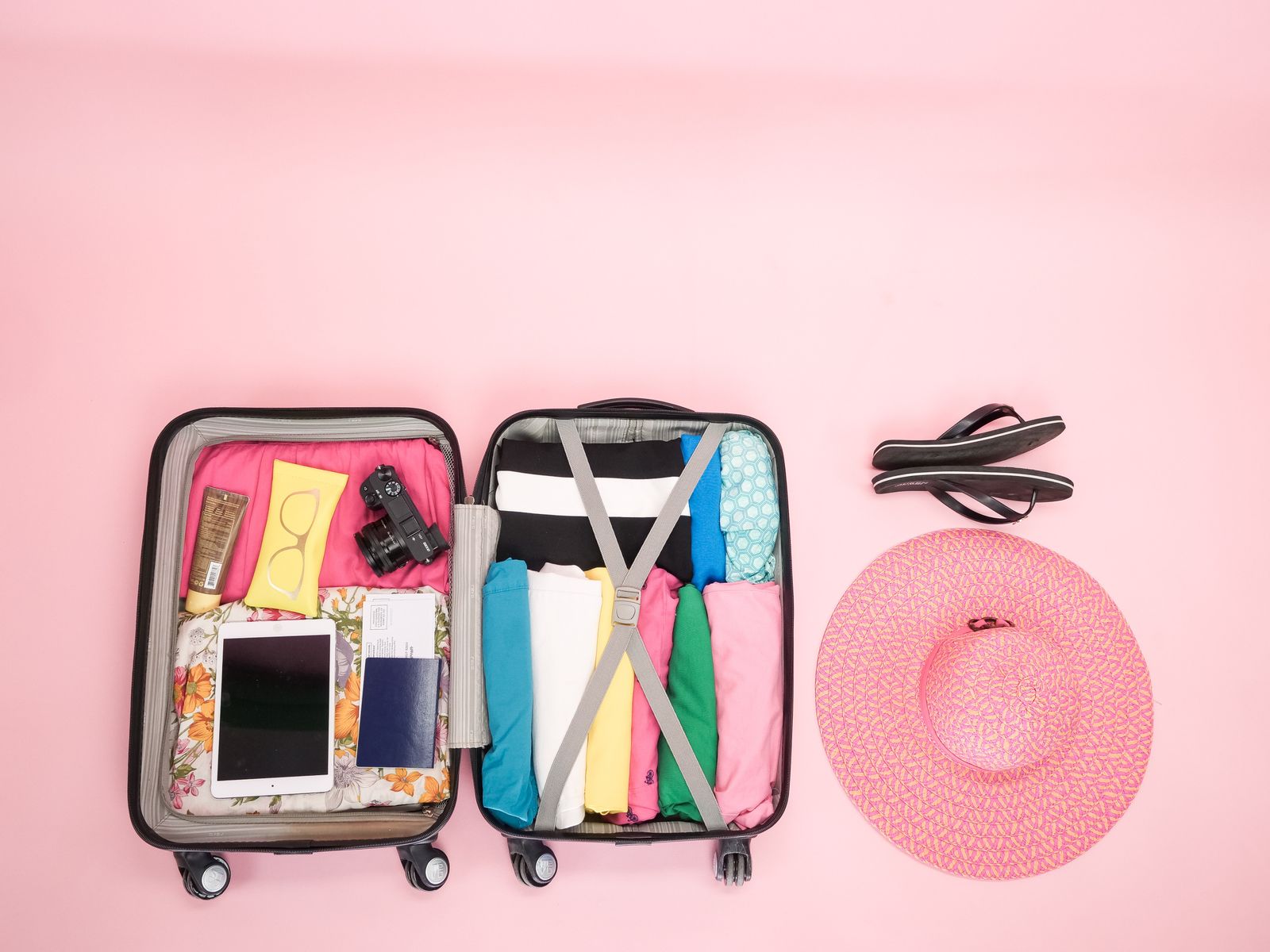
A hard case divided down the middle usually needs space for both halves when fully opened. That can be awkward in a small room. A lid-opening design offers a different way to unpack, but may require more searching beneath stacked clothing. Choose with your likely accommodation and habits in mind. Also look at whether the internal divider stays attached where you want it and whether its pockets take space away from the main compartment.
Think through the journey to your room
Four swivelling wheels make a case easy to move over a smooth floor. Uneven paving may produce quite different results. During a trial, check that the wheels run evenly, the extended handle suits your height and your heels do not strike the case as you pull it. A shop floor cannot reproduce every old-town pavement, but it can reveal poor handle reach or an unstable empty case.
Stairs, missing lifts and platform changes make carrying handles important. Lift a realistically packed case using the top and side handles. Can you lower it with control without twisting your wrist? Empty weight is only the starting point; what matters is the total with your belongings inside. If the case feels heavy before packing, additional interior volume will not solve the problem.
Finally, compare the availability of replacement wheels and handles and read the actual return conditions. Keep the dimensions and empty weight in your packing notes. Check the applicable baggage rules again before each flight booking. A carefully chosen case makes packing more predictable, but it does not remove the need to confirm the allowance for a new journey.