Choose the main purpose first
If you want to work, consider whether you will use a laptop, paper documents or only a phone. A table seat may provide a useful working surface but can involve facing another traveller. An airline-style row may suit you better if you prefer your own space. Inspect the actual carriage diagram where one is available for the service.
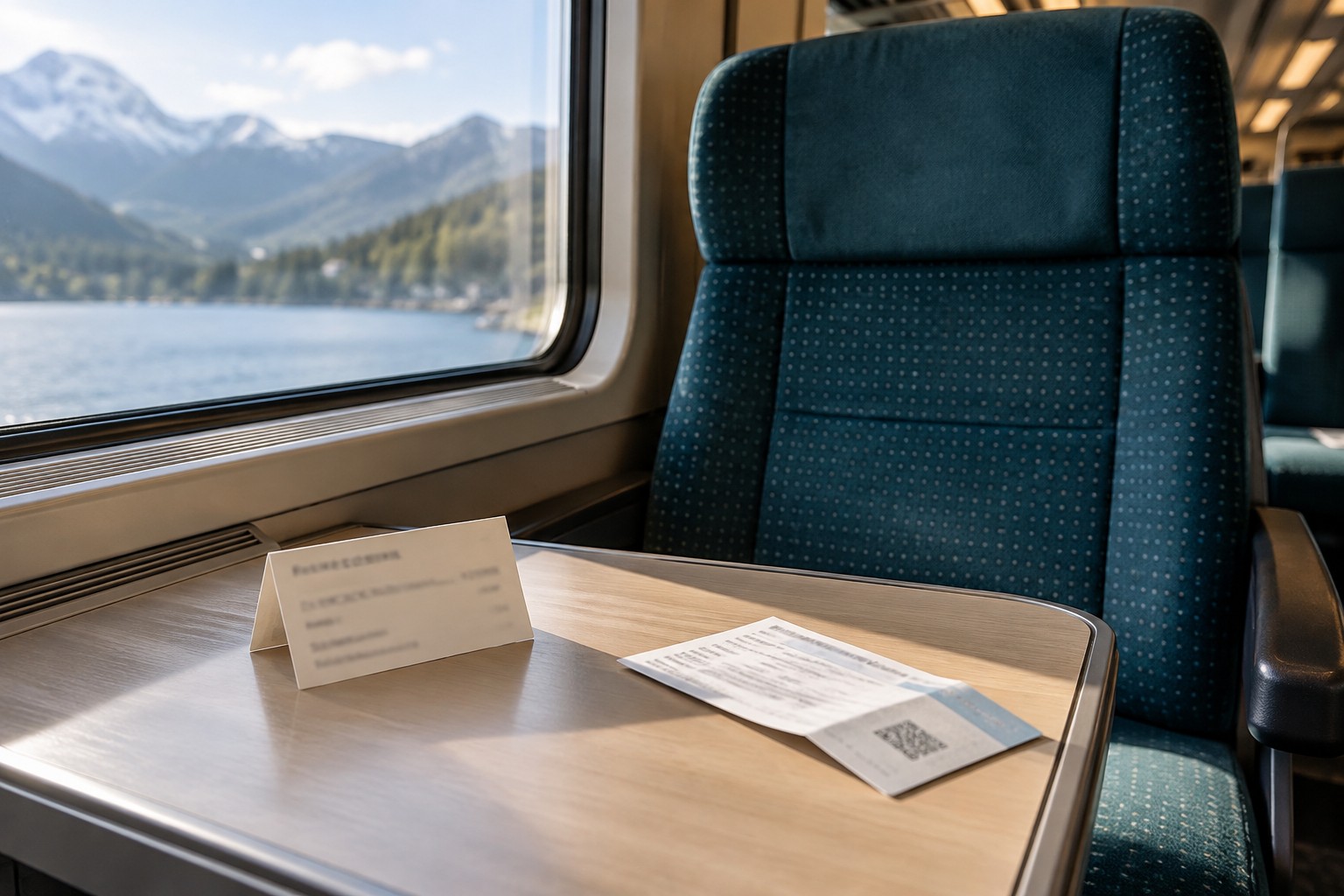
A window seat is the obvious starting point for scenery, but precise orientation cannot always be predicted reliably. A different train set or carriage formation may change expectations. Do not book solely around an assumed direction of travel when another feature, such as easy access to the aisle, matters more to your comfort.
Match quiet areas to your call plans
DB distinguishes mobile-phone and quiet areas on ICE trains. Calls and other noisy activities are discouraged in quiet areas. If you need to join conversations during the journey, that is therefore a poor match for the way you intend to work. Wearing headphones does not make your own voice inaudible to nearby passengers.
A quiet area is not a guarantee of complete silence either. Other travellers, announcements and train noise remain present. Choose work that fits the actual environment and arrange important calls outside the journey where possible. A realistic expectation may help concentrated reading more than imagining that a seat reservation provides a private office.
Consider ordinary movement too
If you expect to stand up frequently, an aisle seat may be more useful than a window view. With limited mobility or particular equipment, suitable places and access need a separate check. Being close to a doorway can shorten some movements while also creating more activity around your seat. Weigh those features against your own priorities.
Think about luggage as well. A large case needs a suitable safe storage place, which may not be immediately beside you. Remove required items beforehand. Avoid assuming that one particular seat solves every question about luggage space, power sockets or internet access throughout the journey.
After booking, check the carriage and seat on the confirmation. Revisit the reservation if the train changes. Prepare something useful to do even without the ideal position, such as documents available offline. A considered seat choice improves the starting conditions, but it should not be the sole requirement for a workable travel day. That leaves you more room to adapt to the vehicle and circumstances actually provided.