Imagine the station journey with the pushchair
Check the route from entrance to platform and through each interchange. Locate lifts on the station plan and review current notices. A step-free route may be longer than the shortest path. Choose a connection allowance based on the route with the pushchair, including possible waiting at lifts, rather than the fastest walk without it.
If two adults are travelling, decide who handles each item. One may look after the child and pushchair while the other manages luggage. Travelling alone requires a combination you can control yourself. Practise folding and carrying the pushchair before the trip if it may need to be stored folded on the train.
Check storage separately from seats
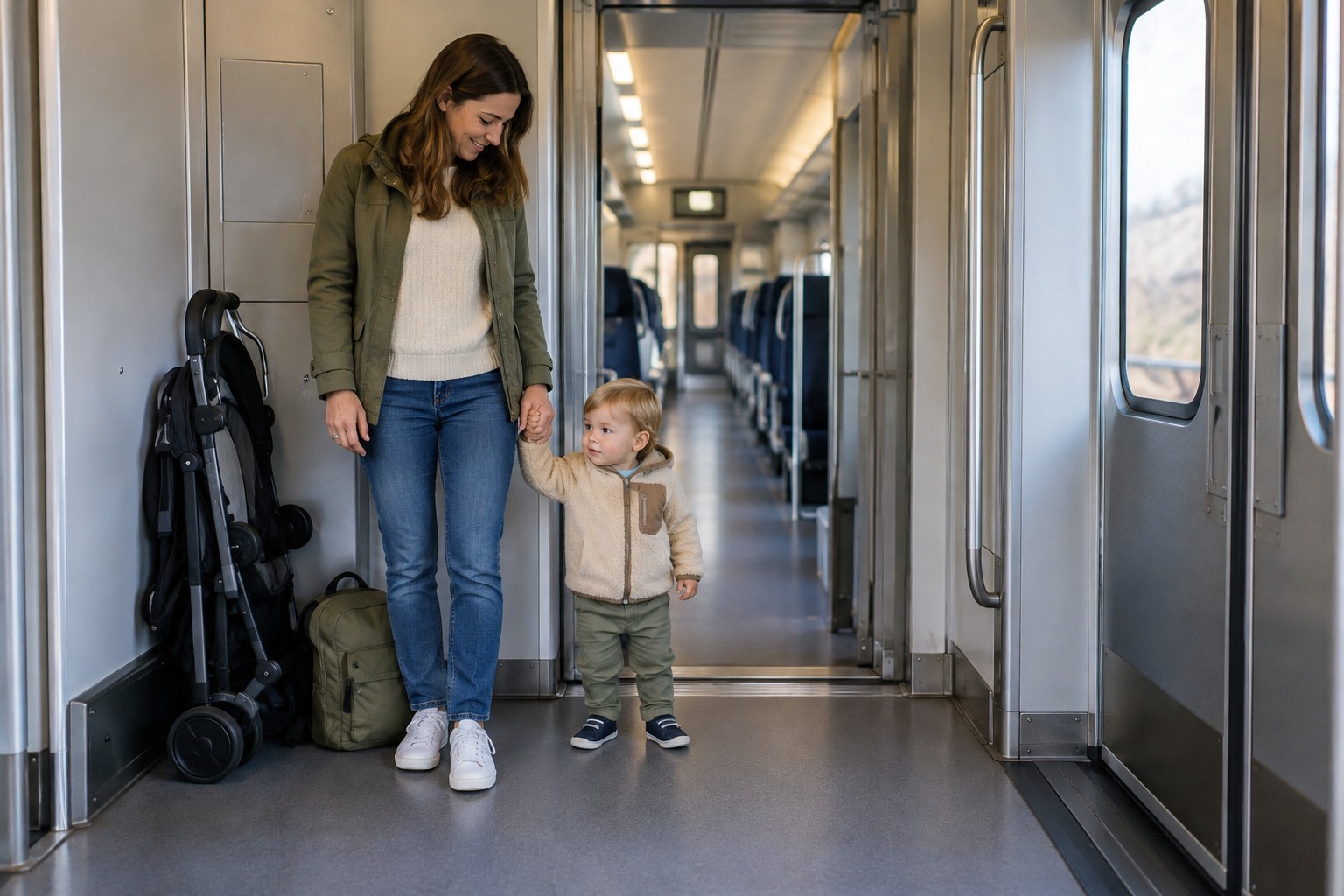
DB recommends easily folded pushchairs or buggies and notes that space may be limited on busy services. Storage can be in or near family areas. Nevertheless, reserving a seat does not automatically provide space for a large unfolded pushchair immediately beside it. Review the information for the particular train rather than relying on the family label alone.
Pack frequently needed items in a small bag and remove it before storing the pushchair. You will not then need access to the whole frame every time something is required. Avoid arrangements where heavy or loose belongings fall out unexpectedly or make the pushchair difficult to manage when it is folded.
Keep doors, aisles and required access routes clear. If the intended area is occupied, ask for a suitable arrangement rather than leaving the pushchair in the passageway. A different train set may change the layout you prepared for. Plan a sequence that does not depend entirely on one particular patch of floor remaining empty.
Organise boarding and leaving calmly
Wait near the appropriate part of the platform where possible and let arriving passengers leave first. Keep the child supervised throughout the handling process and ask staff for help when unsure. Improvised movements at doors or on stairs should not become a necessary part of a tight connection plan.
Before the destination, gather small belongings and prepare luggage and pushchair in good time. Once off the train, allow a calm moment to orientate rather than trying to read a timetable while simultaneously managing a child and several bags. A short pause before the next stage may help more than a continuously compressed schedule. Preparation is intended to simplify the day, not to squeeze the greatest number of tasks into the fewest minutes.