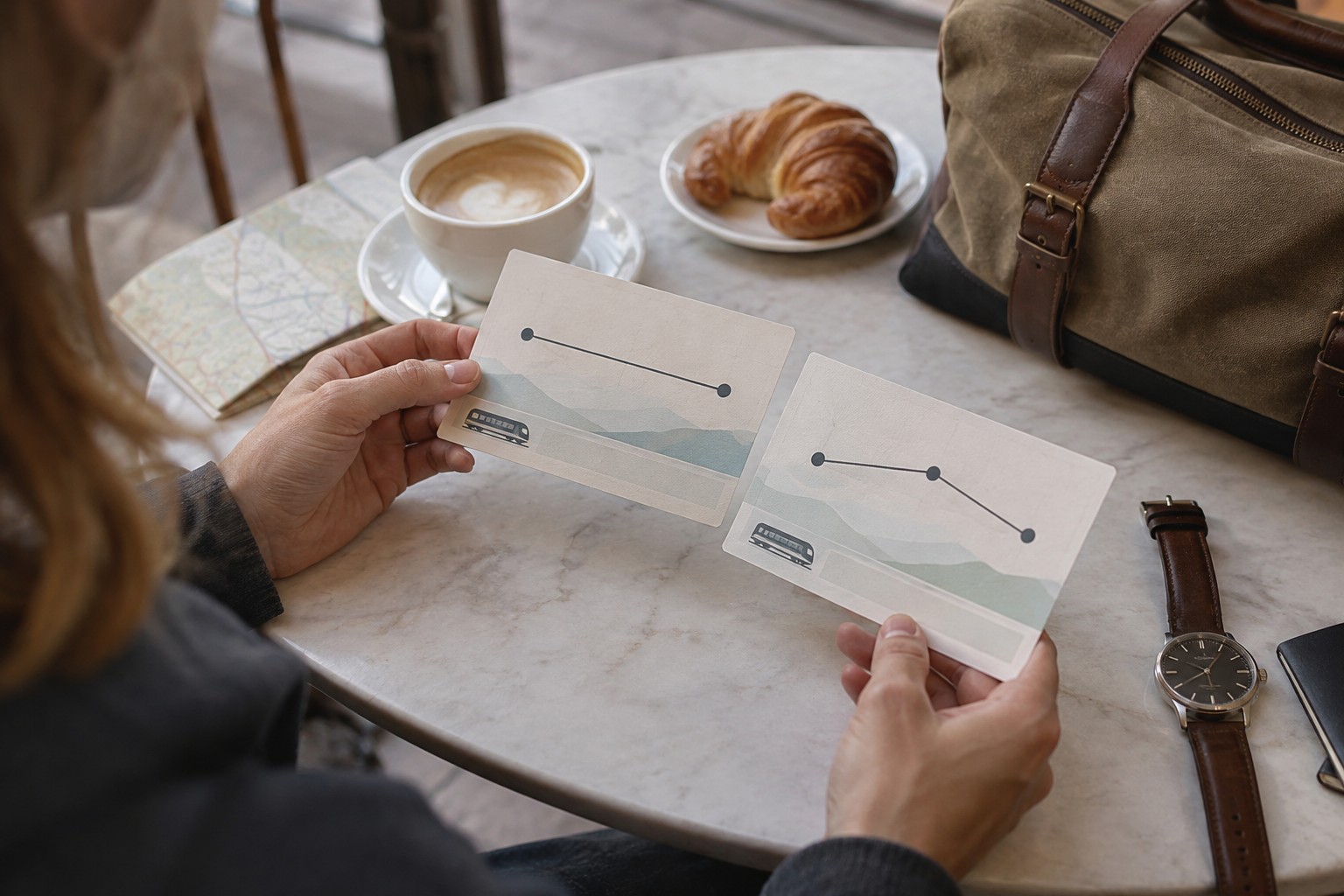
Draw nights and travel days together
Put destinations into a geographically sensible order, then add the intended nights. Next check the actual rail connections. Two nearby cities may require a more awkward transfer than places farther apart on one direct route. The timetable matters more than their distance on the map alone.
Mark journeys that occupy a substantial part of the day. A short stay with a late arrival and early departure can consist mainly of stations, luggage and sleep. If you want to explore a destination, reserve usable time for it. Consider removing an intermediate stop rather than treating every overnight stay as an equally substantial visit.
Include the entire relocation process
Add packing, checkout, reaching the station and arriving at the next accommodation to the train journey. These tasks repeat with every move. A seemingly short rail segment can consequently shape much of a day. Establish whether luggage can be left at the new property before the room becomes available.
Place fixed commitments into the route first. A reserved night train or appointment may constrain the order. Leave enough flexibility elsewhere that a small change does not affect several accommodation bookings. Where you hold separate tickets, examine their conditions and keep the sections distinct in your overview rather than implying one continuous booking.
Compare a day trip from a longer base with another overnight move. Returning takes time, but avoids another packing and arrival process. The balance depends on how close your accommodation is to the station and whether spending the evening at the excursion destination is important to you. Neither arrangement is automatically more efficient.
Maintain a compact journey overview
Create one line per relocation showing the date, departure and arrival stations, accommodation and main unresolved point. This overview cannot replace tickets, but makes conflicting dates easier to spot. Distinguish confirmed bookings from ideas clearly. A train you have not checked should not look like a settled part of the journey.
Before each travel day, review the current connection and arrival arrangements. Keep old documents separately after making changes. On a longer trip, a lightly planned day also provides room for laundry, shopping and rest. A useful sequence connects not only cities but the ordinary tasks between them. That is what allows the journey to remain manageable beyond its first few days.