Identify a fixed core
Start with items needed regardless of trip length: required documents, personal essentials, phone and compatible charging equipment. That core does not automatically grow with every overnight stay. Still check the specific route, because additional countries or transport methods may introduce different requirements. A previous list is a starting point rather than a final guarantee that everything is covered.
Then add clothing and consumable products. Mark which quantities depend on the number of days and which can change through laundry or replenishment. This keeps the reason for each item visible. A list that simply accumulates additions without explanation makes later decisions harder, because you no longer know whether something solved a recurring need or one unusual situation.
Compare three kinds of stay
For a short weekend, fitting everything into one manageable bag without elaborate reorganisation may be the priority. For a week away, a confirmed laundry option can significantly affect the clothing quantity. On a longer journey, caring for belongings becomes part of the plan itself. These distinctions matter more than a fixed rule adding the same number of garments for every extra day.
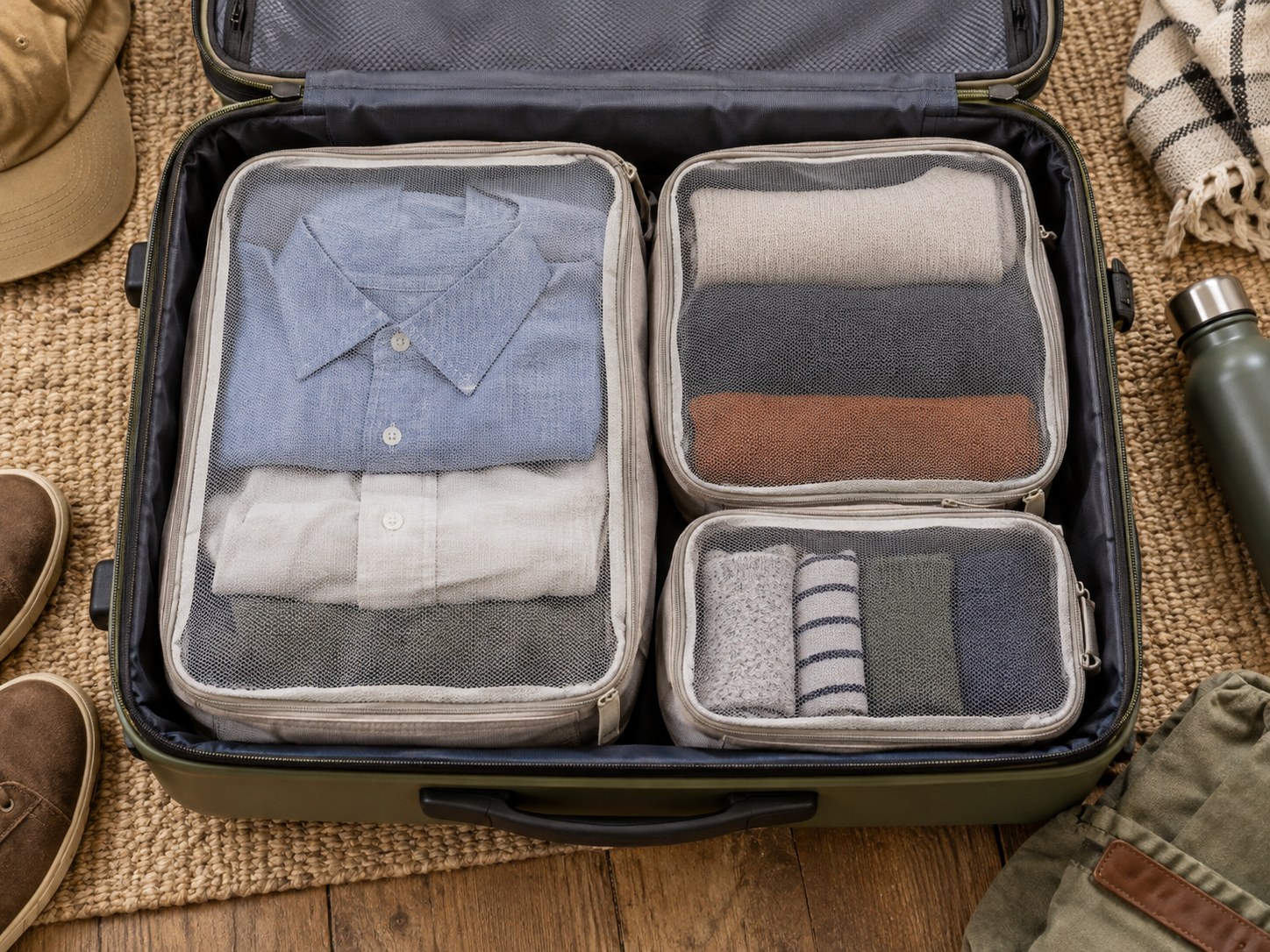
Consider accommodation changes too. A longer trip from one base can be simpler to pack for than several short stays in succession. Frequent carrying and unpacking make clearly organised groups more useful. Note which items need to remain accessible in transit so they do not disappear beneath clothing intended for later days.
Add weather and activity requirements
Check the forecast close to departure and choose clothes that combine appropriately. Add only the equipment genuinely needed for a particular activity. For each bulky item, ask whether it will be used, whether something already packed can serve the purpose or whether a reliably confirmed option is available at the destination.
Avoid covering every imaginable exception with another separate object. A reasonable reserve can help, but multiple complete contingency kits quickly add weight. Distinguish personally essential items from optional comforts. If space becomes tight, you can then make a focused decision instead of reconsidering the entire list from the beginning.
Include the return journey
Leave room for worn clothing and objects that may no longer pack as neatly as they did at home. Test the luggage when full and weigh it when weight restrictions apply. Consider the permitted number of pieces as well as their size. Buying another bag does not automatically solve an allowance problem.
After the stay, mark unused items and anything that was missing. Add a short note about the trip type and weather. This produces a collection of understandable variations rather than an endlessly expanding universal list. Next time, choose the closest variation and adapt it to the new route instead of rebuilding the decision from scratch.