Begin with the everyday contents
Empty your existing wallet completely. Separate necessary cards from old receipts, rarely used loyalty cards and objects carried purely from habit. A trip may call for a different selection from your daily routine. Consider which payment methods are needed at the destination and for booked services, instead of automatically taking every available card.
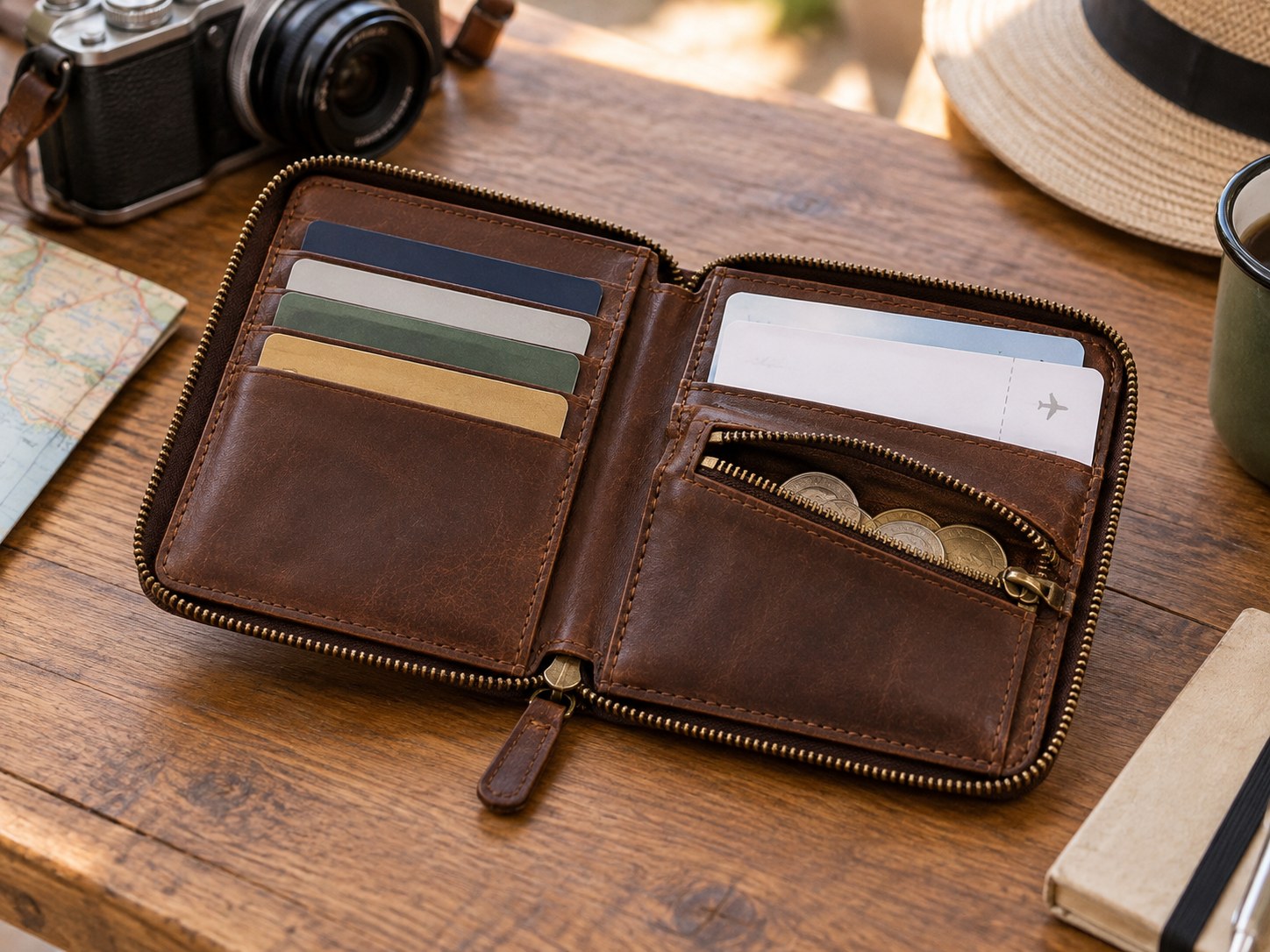
Add a normal quantity of coins and a few folded receipts if those are likely to accumulate. An empty wallet often looks considerably slimmer than it will in use. Test the closure with this load and check whether cards bend sharply. Compartments that require force to insert an item are inconvenient when you are trying to pay and move on.
Test access while seated and standing
Remove a card, replace it and then open the coin compartment. Do you have to unfold the whole wallet? Can loose receipts fall out? A clear sequence is more useful than a complicated arrangement whose purpose you must repeatedly remember. Very small pockets should match the actual shape of what you intend to put inside them.
If you will use different currencies, separating them can help. That does not necessarily require one oversized wallet. A small additional coin purse may be clearer, although it occupies space of its own. Decide according to how often you will switch and whether the second currency is genuinely needed during the same day.
A travel wallet is not automatically the best home for every document. A passport requires different dimensions from a payment card. A design that contains everything becomes larger and exposes more when frequently opened. Consider whether keeping rarely needed papers separately would fit your routine better than combining every item in one organiser.
Match it to the bag and the journey home
Try the filled wallet in the bag or pocket where you will carry it. You should be able to remove it without pulling other belongings along, and it should return to a consistent place. Avoid a position from which it can slide out when you sit down. Additional technical protection claims do not replace a reliable closure or attentive handling.
At the end of a travel day, remove unnecessary receipts and review the arrangement. Keep information for blocking important payment cards separately and accessibly. The wallet itself should not contain a complete collection of sensitive access details. With fewer, clearly assigned contents, it is easier to check that everything is back in place before leaving a café or shop.