Try the mask in your resting position
Do not assess a sleep mask only while standing in front of a mirror. Lean back as you expect to during the trip and turn your head to the side. The strap should neither slip nor press uncomfortably. Check for light entering around the nose and irritation from the edges. A more heavily padded model occupies more bag space and may feel different when you lie on your side.
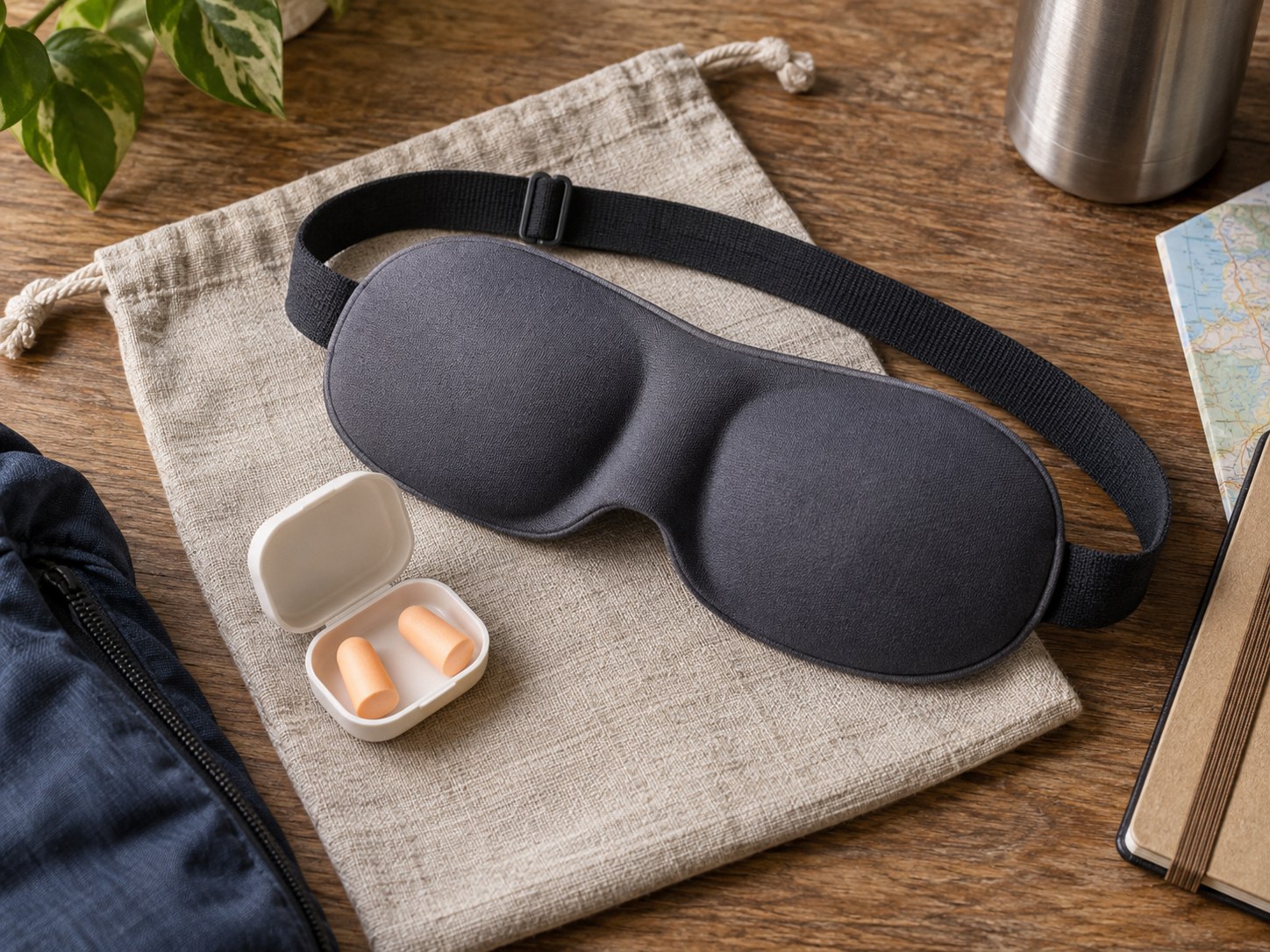
Adjustable straps help with fitting, but their buckles also need to sit somewhere comfortable. Read the cleaning instructions. A mask is worn close to your face and should not travel unprotected among shoes or used clothes. A small clean pouch keeps it separate without requiring a large additional case. Make sure the mask is dry before closing that pouch for storage.
Choose earplugs using their instructions
Material, shape and size affect fit. Follow the particular product's directions for use and cleaning. Do not force unsuitable plugs into place. If they cause pain or other problems, stop using them and seek appropriate advice where needed. General travel guidance cannot replace an individual assessment of ear conditions.
Different models reduce sound differently. Stronger reduction is not automatically desirable in every situation because important announcements and warning signals must be considered. Do not wear them where you need to hear traffic attentively. During a train journey, an additional visual reminder of your stop may help, but do not rely entirely on an alarm you might fail to notice.
Rehearse with a small set
Try both items during a short rest before travelling. This can reveal whether the mask strap clashes with headphones or whether you continually need to adjust something. Pack the set where it can be reached without a prolonged search, and maintain the same storage and cleaning routine when changing accommodation frequently.
Do not expect guaranteed sleep. Seat position, lighting, surroundings and personal habits interact. Sometimes a different seat or quieter accommodation matters more than another accessory. Bring only what has worked for you and check after use that both small earplugs are back in their case. Missing pieces are often noticed only when they are needed again. Keeping the set simple makes that check easier and avoids carrying several unfamiliar alternatives on every trip.