Confirm the washing option
Before booking or arriving, check whether the accommodation provides a washing machine, a laundry service or information about a nearby laundrette. A general reference to laundry facilities can mean different things. Ask about access, charges, detergent and restrictions when that facility is essential to your packing plan. An assumption about an amenity should not determine how little clothing you bring.
Do not start on the final evening
Choose a laundry day that leaves time afterwards for drying. A late wash immediately before moving accommodation can result in damp luggage. Allow waiting time if machines are shared. A relatively free morning is often easier to manage than a tight slot between two booked visits.
Keep a wearable outfit aside while the rest is being washed. That sounds obvious, but is easily overlooked with a very small clothing selection. Separate garments according to their care labels, rather than merely what fits into the machine. A travel schedule is not a reason to use an unsuitable programme for delicate clothing.
Treat drying as a separate task
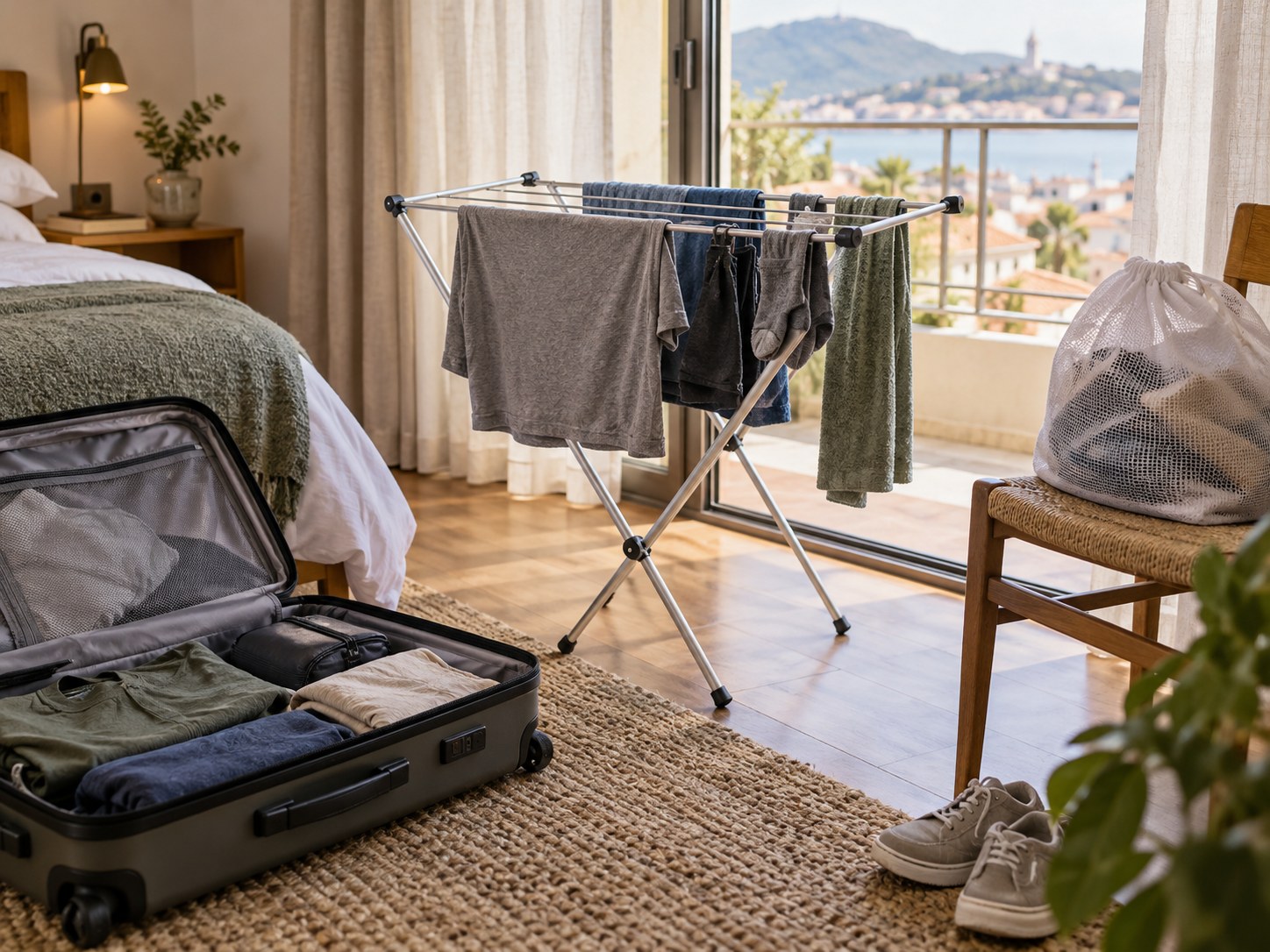
Check whether a dryer is available and whether your garments are suitable for it. Without one, you need an appropriate place where hanging laundry is allowed. Do not drape clothing over electrical equipment, and respect the accommodation's rules. Even small items can remain damp for a long time when folded closely together or left in a poorly ventilated room.
A compact drying rack shown in an accommodation photograph does not guarantee that one will be available during your stay. Ask specifically if you depend on it. Avoid a plan that works only with perfect weather and immediately available equipment. A modest clothing reserve can absorb these uncertainties without requiring a large additional suitcase.
Carry used clothes separately
A lightweight laundry bag separates worn clothing from clean items. It should match the likely volume and be washable itself. Damp garments need different handling from dry clothes that have simply been worn. Air and dry them where possible before carrying them closed for an extended period. Separation alone does not solve the problem of residual moisture.
Use the experience for the next packing list
After the journey, note how often you actually washed clothes and which materials were ready to wear again quickly. This gives a better basis for quantities on the next trip. Carrying fewer clothes is only easier when their care fits the itinerary. An additional garment can be a sensible choice if it avoids a rushed wash at an inconvenient place or time.