Read Bjørvika as a whole district
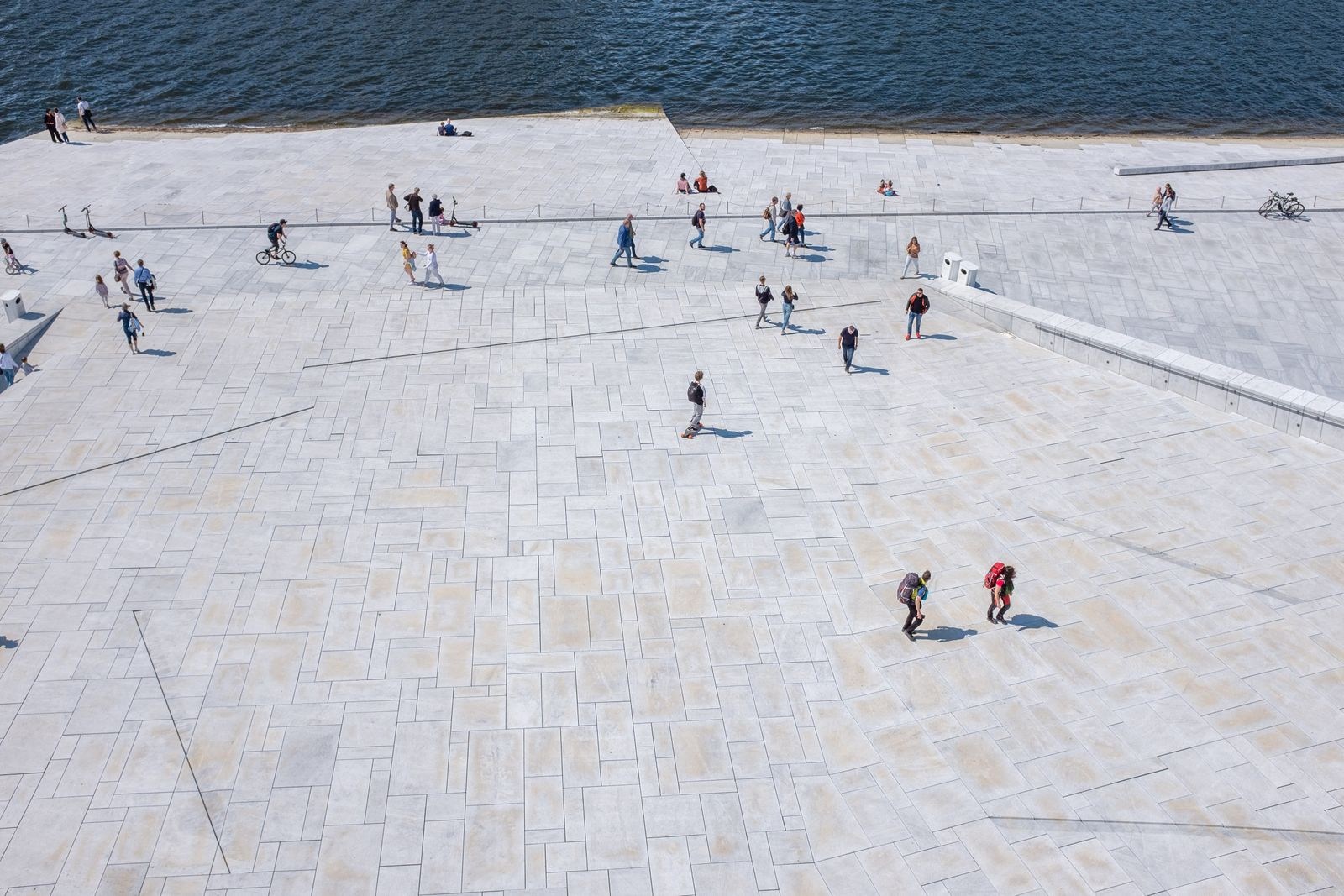
Start around Bjørvika with a walk that brings architecture and water together. This former harbour and traffic area has changed substantially; the Opera, newer buildings and public waterfront spaces now shape the experience. Take time to understand how these places connect before an indoor visit narrows your attention to one institution.
A small itinerary could combine the Opera's surroundings with a stretch towards Sørenga. Decide at the waterfront how far you genuinely want to walk. With photographs and longer pauses, this circuit becomes an activity in its own right. The same route cannot sensibly be budgeted as both a quick transfer and an extended sightseeing session.
Oslo's harbour promenade covers a much larger area than this first walk. Select a section rather than making completion the goal. Continuing towards Aker Brygge adds distance that deserves a place in the schedule. Several attractive waterfront fragments on a map can accumulate into a surprisingly long day on foot.
Let one collection shape the museum day
Bygdøy brings together museums with quite different subjects. Fram, Kon-Tiki and the Norwegian Museum of Cultural History are not interchangeable stops: polar exploration, maritime journeys and cultural history create different expectations. Read about the collection that interests you most, then organise the outing around that choice.
Having several institutions on one peninsula can make them look like a single package. Instead, count time inside the museum, the walk between entrances and a proper break. A second institution is an option if attention and enthusiasm remain, rather than a requirement for making the journey worthwhile.
Check the actual outward and return journeys with the transport operator. A boat connection shown in photographs may not suit your date or the time you intend to travel. Compare the land connection where necessary. For the return, the location of the museum exit is more useful than a general map pin for Bygdøy.
Alternate indoor time and open waterfront
With two full days, one can centre on the harbour and central streets while the other belongs to Bygdøy. Poor weather may justify switching the order when reservations allow. Keep the unbooked waterfront section flexible instead of filling both days with fixed entry times that make changes difficult.
Wind and available daylight affect a waterside outing more than distance alone suggests. A short walk after a museum may be more appealing than a long finishing route fixed that morning. If dinner plans involve returning to your accommodation for another layer or stored luggage, include that journey before committing to a final harbour extension.