Group places by the purpose of the visit
Beside each city, write what you want to do there. One museum or a walk may fit a day trip. Several scattered interests, an evening event or a very early start may support staying overnight. Let the intended experience determine the decision rather than the mere number of city names on the itinerary.
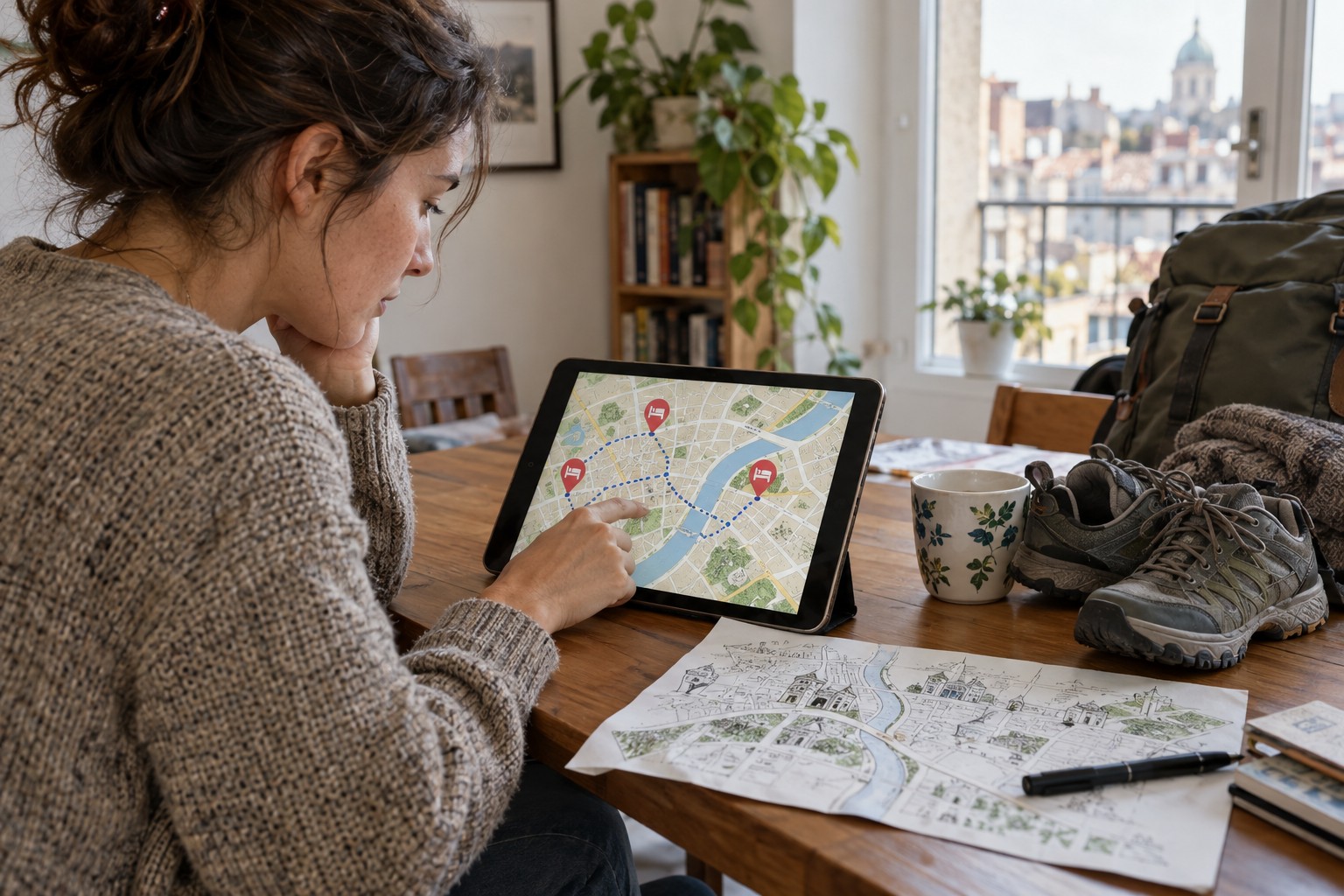
Group nearby destinations around possible bases and check actual connections. A short straight-line distance does not necessarily create an easy excursion. Compare stations, frequency and return options. A base at a suitable transport junction may support several visits even if it is not the largest or most famous city in the region.
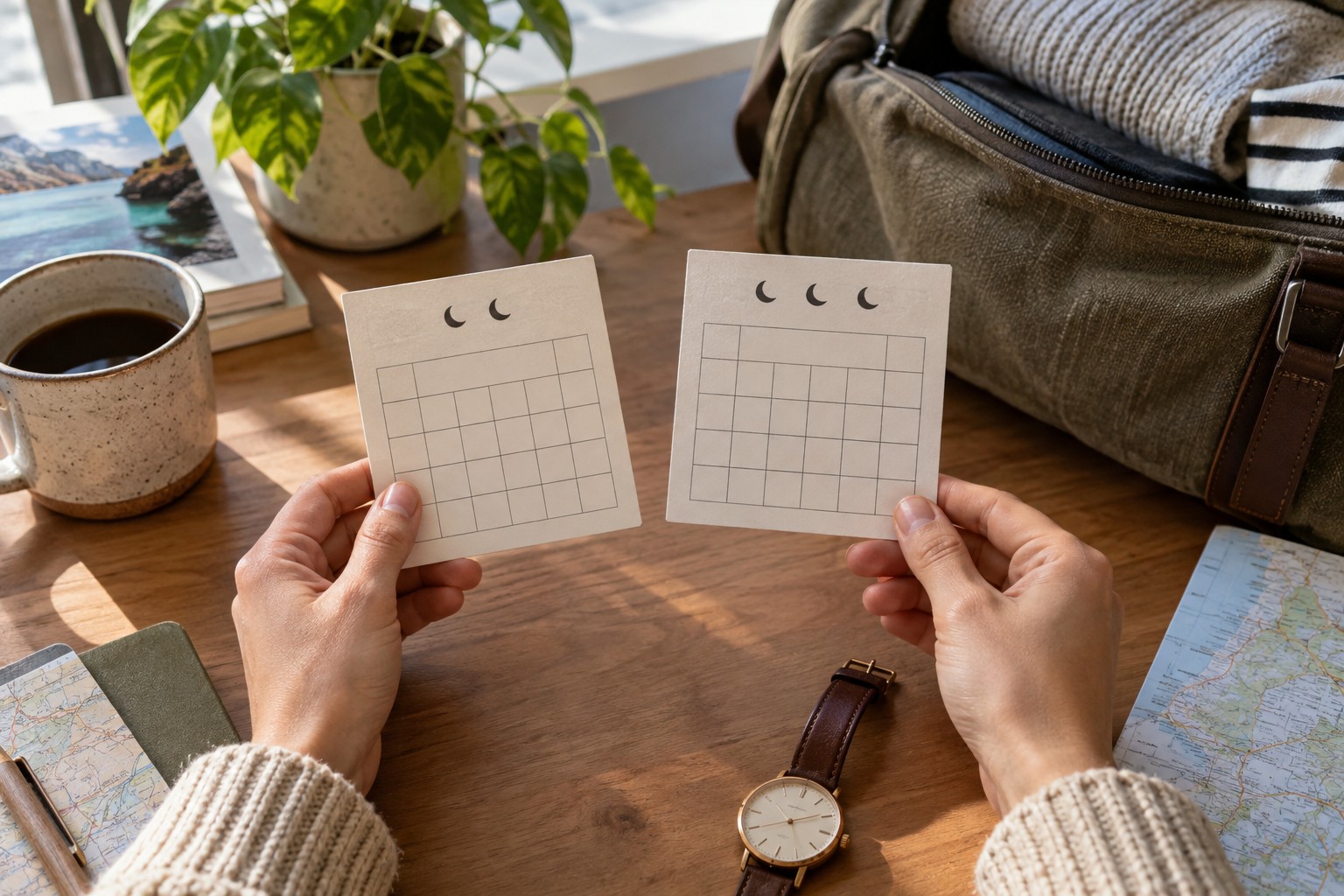
Compare returning with relocating
Calculate a day trip from door to door, including the station approach, train and route to the first activity. Compare that with packing, checkout, luggage handling and check-in when changing accommodation. The train journey alone does not describe either option fully. Both involve tasks beyond the time spent moving between cities.
Consider how often the same route would be repeated. Returning may be reasonable for one excursion. If you plan to visit the same distant city on several consecutive days, staying there may become more sensible. Conversely, a longer stay at one base can make room for laundry, shopping and a less hurried start to the day.
When travelling with others, discuss different preferences. Some may want to remain at the destination in the evening, while others prefer returning to the same room. A shared base can also support separate daytime activities. Everyone should know the return route rather than depending entirely on the one person carrying all the booking information.
Put necessary moves in useful places
Where a relocation is needed, position it between geographically connected sections of the trip. Avoid returning unnecessarily to a base you have already left. Check whether an intermediate sightseeing stop with luggage storage genuinely works or simply complicates the day. A straightforward travel day can be more pleasant than an overloaded transition containing several unrelated tasks.
Keep some flexible time at each base instead of filling every day with excursions. This allows a visit to move around weather or opening days. The trip can remain varied without daily packing becoming its main recurring activity. What matters is a structure that makes your chosen destinations accessible while still accommodating ordinary breaks and the practical needs of a longer journey.